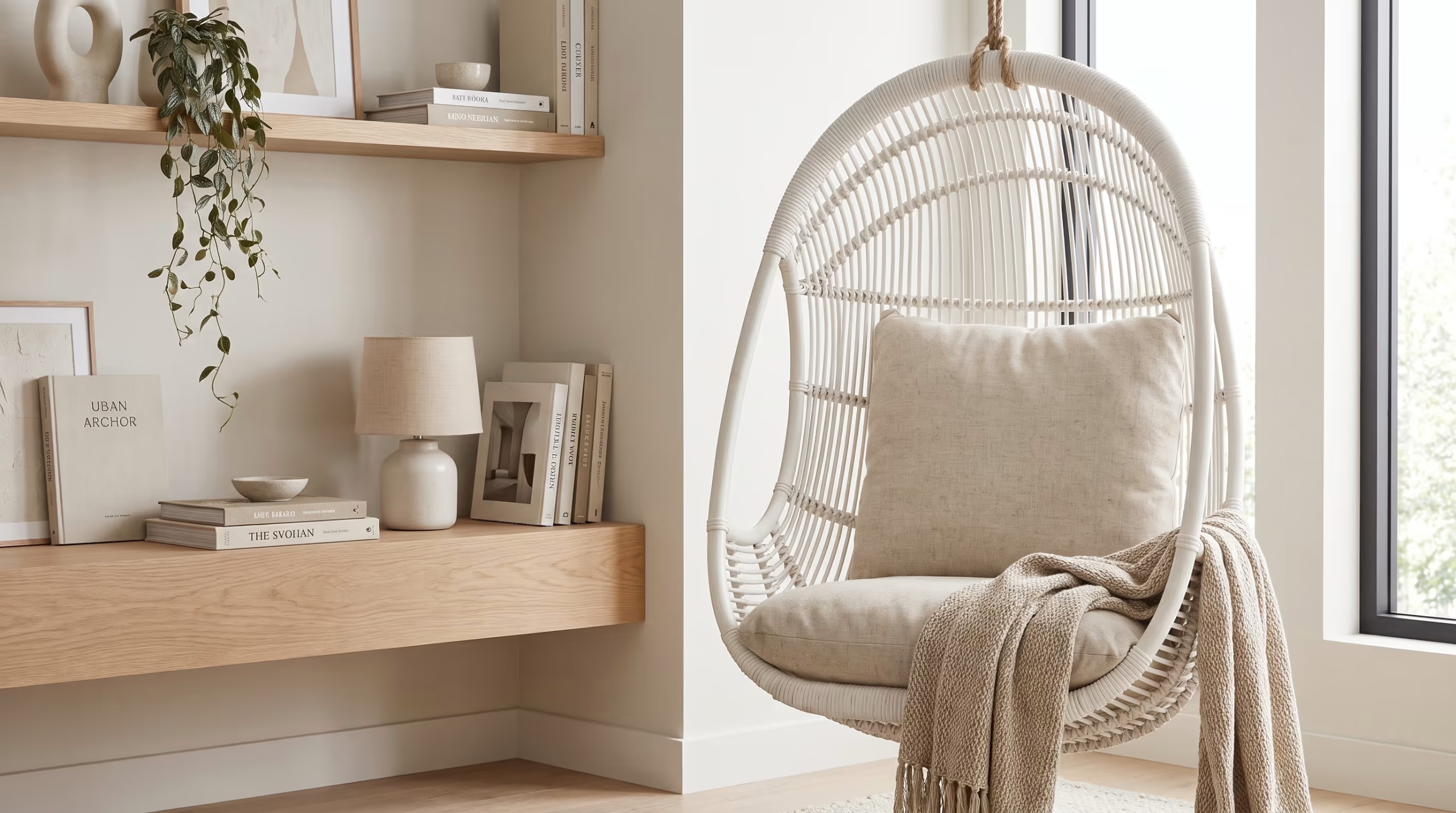
The egg chair is a statement piece that doubles as a cosy reading nook. Its rounded, enclosed shape wraps around you, creating a small pocket of calm in the middle of a busy living room or bedroom, and it looks as good as it feels. Few furniture pieces manage to be both a design focal point and a genuinely comfortable place to settle in with a book.
It’s also one of the more versatile statement pieces you can buy. The same silhouette works in a living room, a teenager’s bedroom, a sunroom, or a covered patio, which makes it easy to justify and easy to move if your layout changes.
Choosing one isn’t as simple as picking the prettiest shape, though. Indoor and outdoor versions are built very differently, materials vary widely in comfort and durability, and a hanging model needs proper support to be safe. This guide covers everything you need to know about choosing an egg chair, from indoor and hanging options to materials, placement, and how it compares to a standard armchair, plus how floating shelves can finish the corner.
Why an Egg Chair Is a Smart Addition to Your Home
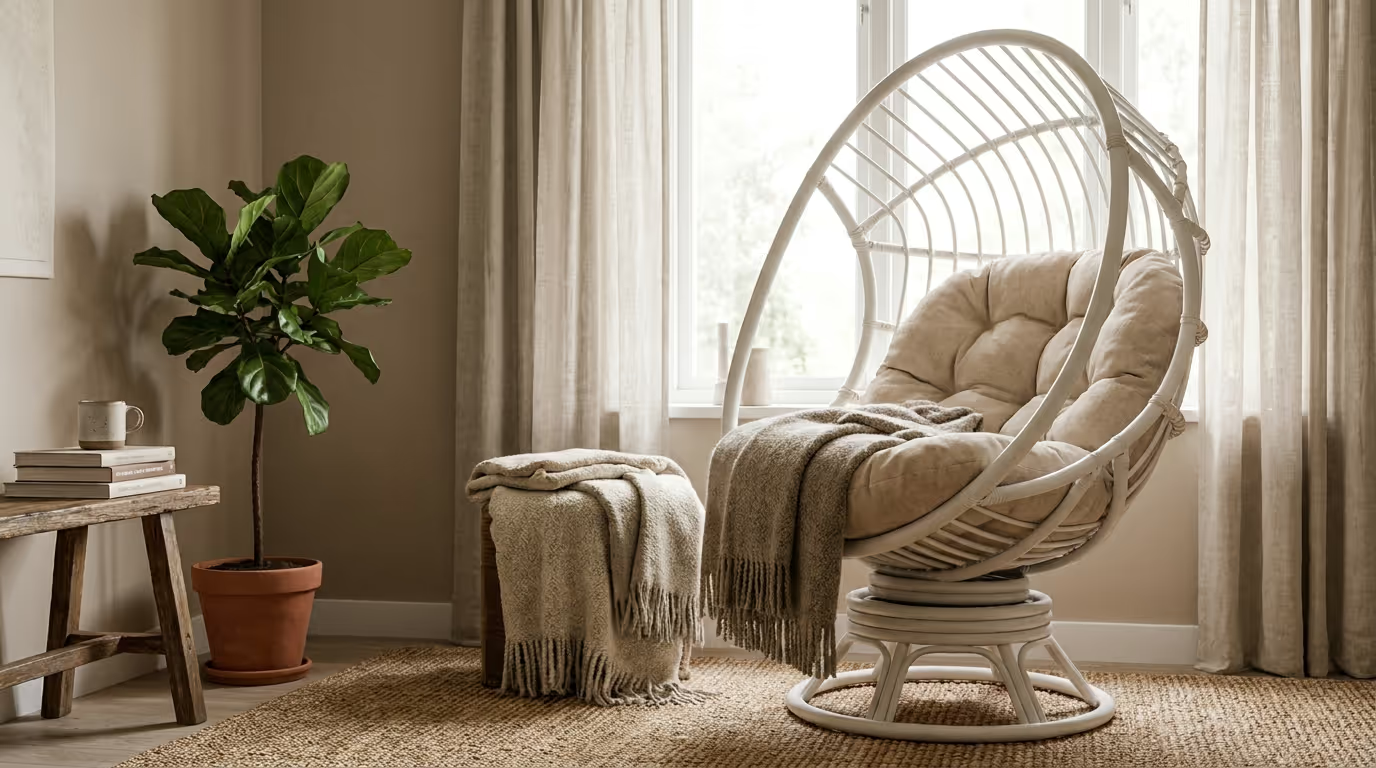
An egg chair earns its place through comfort first. The high, curved back and sides cradle your body and soften the surrounding room, which is why it feels so enclosed and relaxing compared with a regular chair. Add a thick cushion and it quickly becomes the spot everyone in the house wants.
It also works hard in small spaces. Despite its dramatic look, an egg chair has a surprisingly compact footprint, often no wider than a standard armchair, and it makes a natural focal point in a corner, beside a window, or at the end of a hallway. Because the shape is so distinctive, it adds personality to a room without needing much else around it.
Style is the other big draw. Whether you choose a sleek white shell, a natural rattan weave, or a bold coloured finish, the silhouette stays instantly recognisable, so it suits Scandinavian, boho, contemporary, and mid-century rooms alike. It also pairs easily with existing furniture because it reads as a sculptural accent rather than part of a matching set.
Before getting into the details, it helps to see what’s available. Browse our furniture and shelving collection here.
Understanding Egg Chair Styles and Features
Not every design is built the same way, and the differences in shape, support, and materials affect both comfort and how long the chair lasts.
Indoor Egg Chair Styles and Sizes
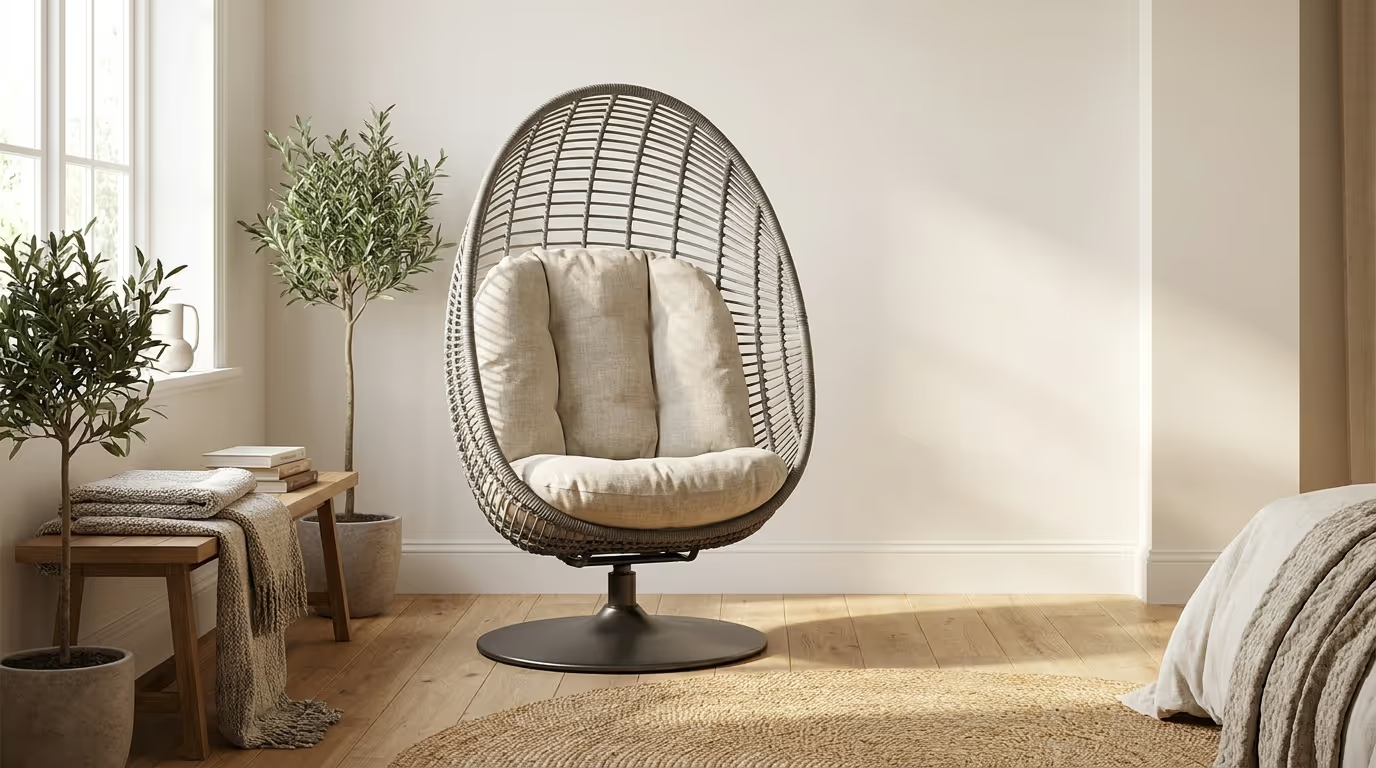
An indoor egg chair usually comes in one of two forms: a swivel pod on a pedestal base, or a fixed model on legs. Seat width generally runs from around 80cm to 110cm, with taller backs offering a more enclosed feeling. Smaller rooms suit the narrower end of that range, while larger spaces can carry a deeper, more oversized design.
If you’re buying for a bedroom or reading corner, check the interior depth as well as the outside dimensions, since taller people need room to tuck their legs up comfortably. Also look at the seat height, as a chair that sits too low can be difficult to climb out of.
Hanging and Outdoor Egg Chair Options
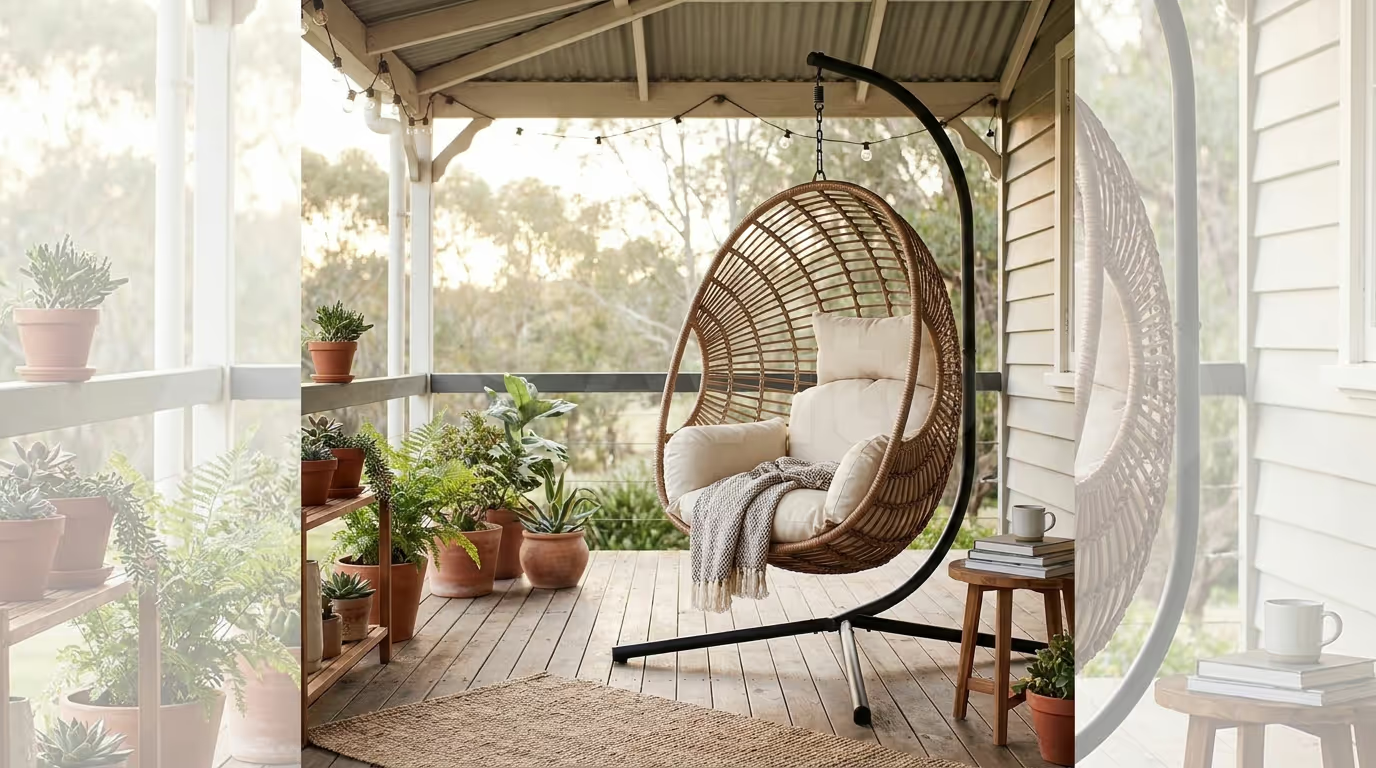
A hanging egg chair swings from a ceiling hook or a freestanding frame, and is a popular choice for verandas, sunrooms, and covered patios. Ceiling-mounted versions must be fixed into a structural beam or joist, not just plasterboard, so check the weight rating and installation requirements carefully. Freestanding frames cost more but avoid any drilling and can be moved between rooms or seasons.
For true outdoor use, look for weather-resistant synthetic rattan and UV-stable cushions, and bring the cushions inside when it rains. Even a weatherproof outdoor model lasts longer when kept under cover.
Egg Chair Materials and Cushion Choices
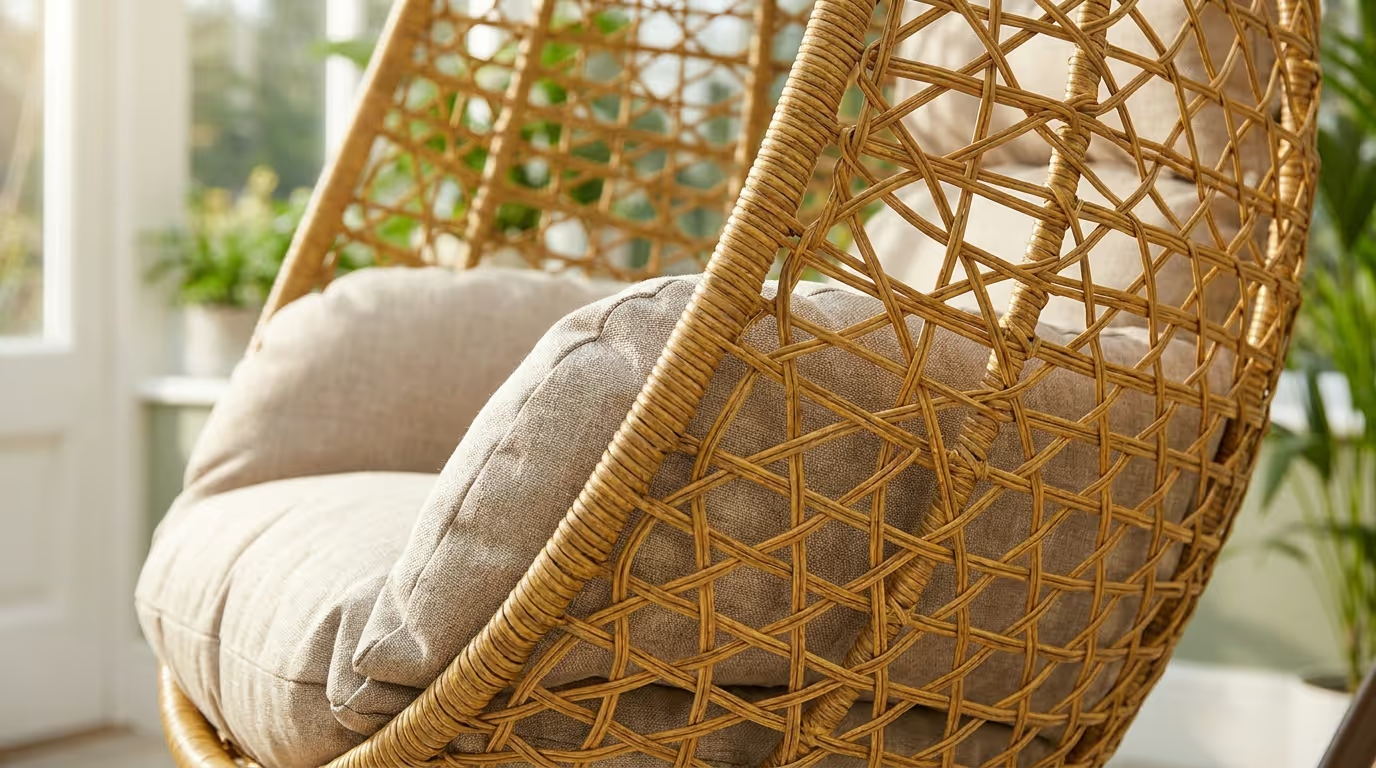
The frame of an egg chair is most often synthetic rattan woven over a steel or aluminium base, which is light, durable, and easy to wipe clean. Natural rattan and cane look beautiful indoors but aren’t suited to damp conditions or direct sun.
Cushions matter just as much as the frame. Look for thick, supportive padding with removable, washable covers, since this is the part you’ll be sitting against for hours. Neutral fabrics like linen, boucle, and grey wool blends suit most rooms and are easy to refresh with a new cushion cover.
Maintenance is straightforward. Wipe synthetic rattan with a damp cloth, vacuum cushions regularly, and spot-clean covers according to the care label. Avoid placing the chair in direct afternoon sun for long periods, as even UV-stable fabrics can fade over time.
Ready to explore our vast veriety of products? Explore our furniture range here.
Choosing the Right Egg Chair for Your Space
Once you know the styles on offer, fitting one into your home comes down to placement and how it works alongside your existing seating. Budget is worth considering early too: hanging models with stands and premium cushions cost more than basic pedestal designs, so decide whether you want a feature piece or a simple comfortable seat before you start comparing.
Egg Chair Placement Tips for Living Rooms and Bedrooms
In a living room, an egg chair works best in a corner or beside a window, angled slightly toward the room so it doesn’t feel pushed away from the conversation. In a bedroom, it makes a lovely reading spot beside a wardrobe or at the foot of the bed. Leave about 60cm of clear space in front so you can get in and out easily, and keep a hanging model well away from walls and furniture so it can swing freely.
Safety matters too. Check the stated weight capacity before you buy, particularly if the chair will be shared by adults and children, and make sure the base or stand sits flat on the floor so it doesn’t wobble when you get in.
Egg Chair vs Armchair: Which Do You Need?
A standard armchair suits households that want flexible, everyday seating for guests and TV watching. An egg chair is better for one person at a time, usually as a dedicated spot for reading, relaxing, or working on a laptop. Many homes benefit from having both, with the armchair handling social seating and the pod serving as a personal retreat.
Space is the other deciding factor. If your room is small, the pod shape can double as the only extra seat you need, while larger rooms have space for both without crowding the layout.
Not sure which egg chair suits your home? Get in touch with our team for advice.
Complete Your Egg Chair Corner with Floating Shelves
An egg chair naturally creates a nook, and floating shelves are the easiest way to make that nook work harder without adding more furniture to the floor.
Floating Shelves Beside an Egg Chair
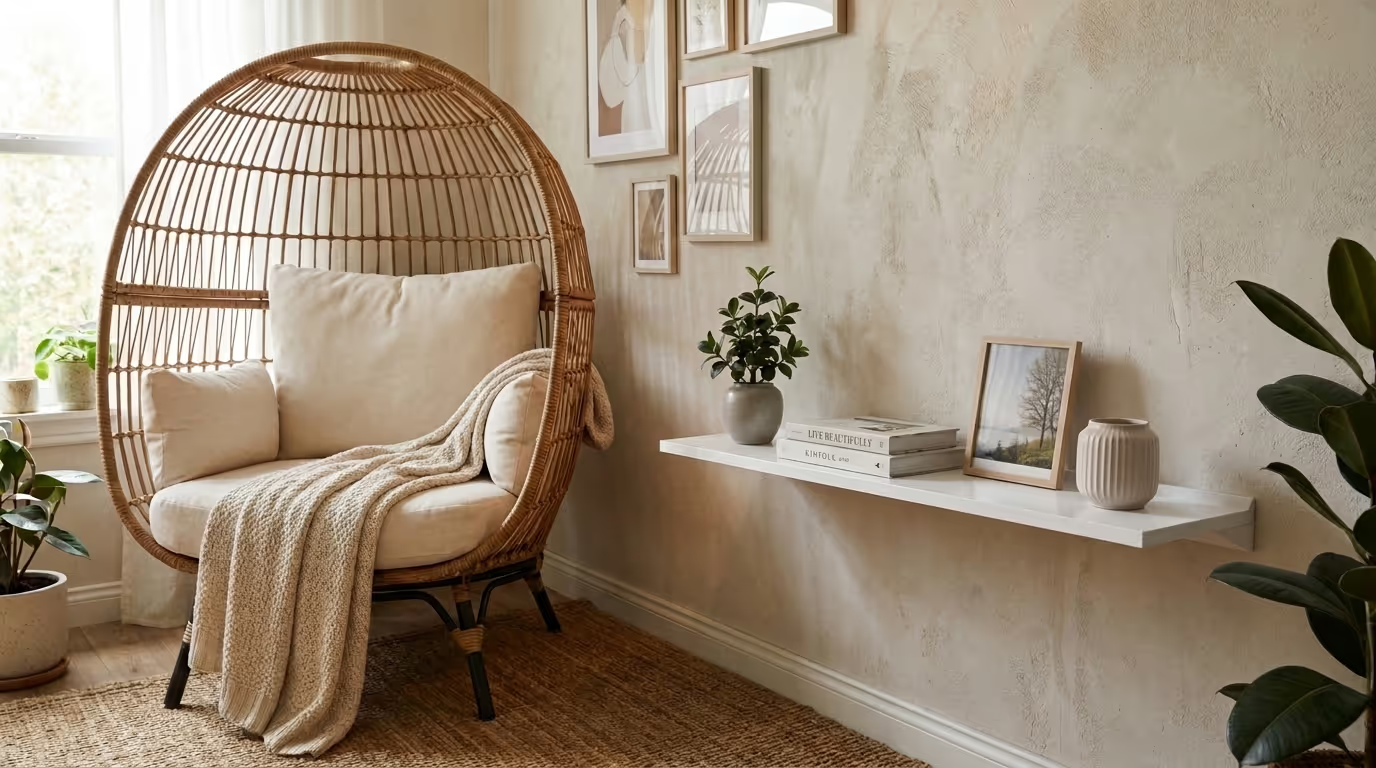
A floating shelf mounted beside your egg chair gives you somewhere to put a cup of tea, a lamp, or the book you’re halfway through, so you don’t need a bulky side table crowding a small corner. Because floating shelves sit off the floor, they keep the area around the chair open, which matters most with a hanging model that needs room to swing.
Keep a few inches of space between the shelf edge and the seat so you’re not bumping your elbow when you reach, and mount it slightly lower than a normal wall shelf so it sits at a comfortable height from a seated position.
Make your house complete with this Floating Shelve Floating White Shelves
Floating Shelves for an Egg Chair Reading Nook
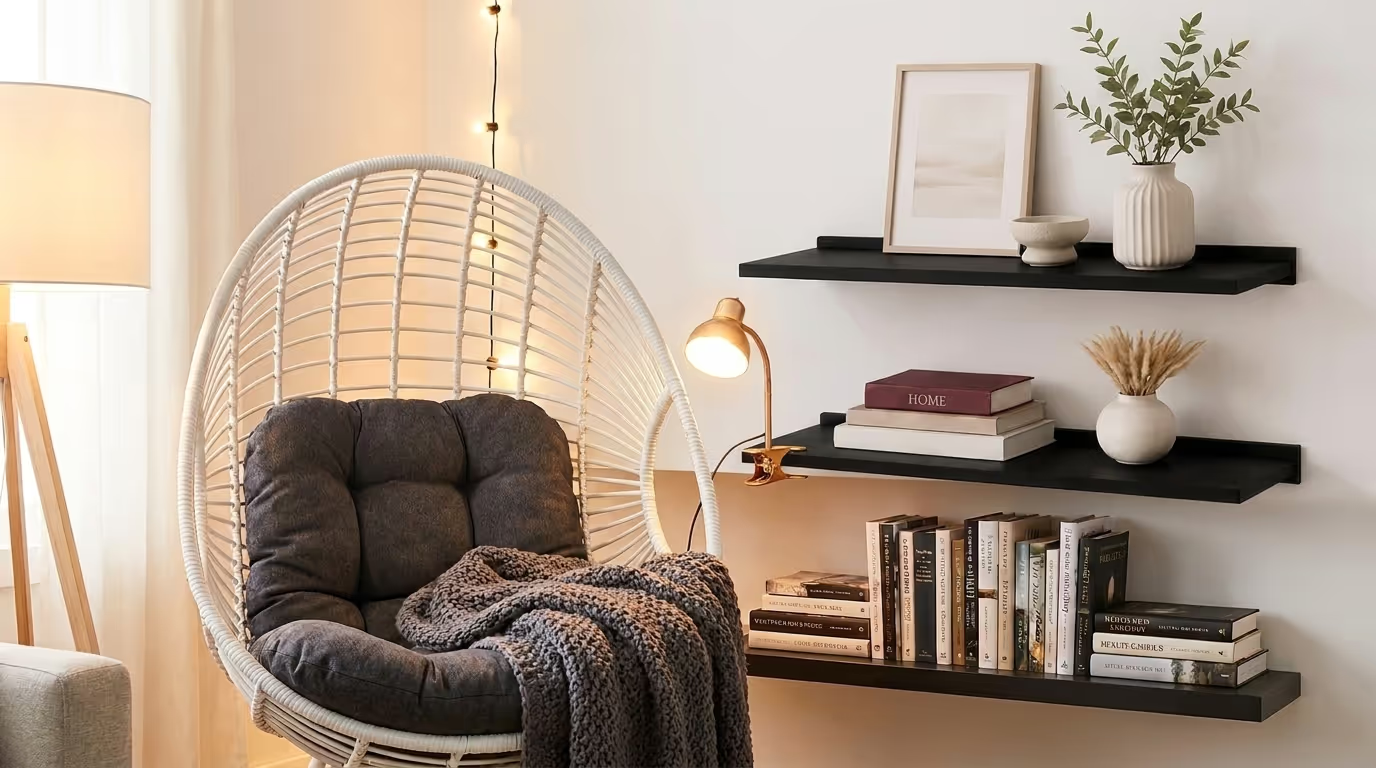
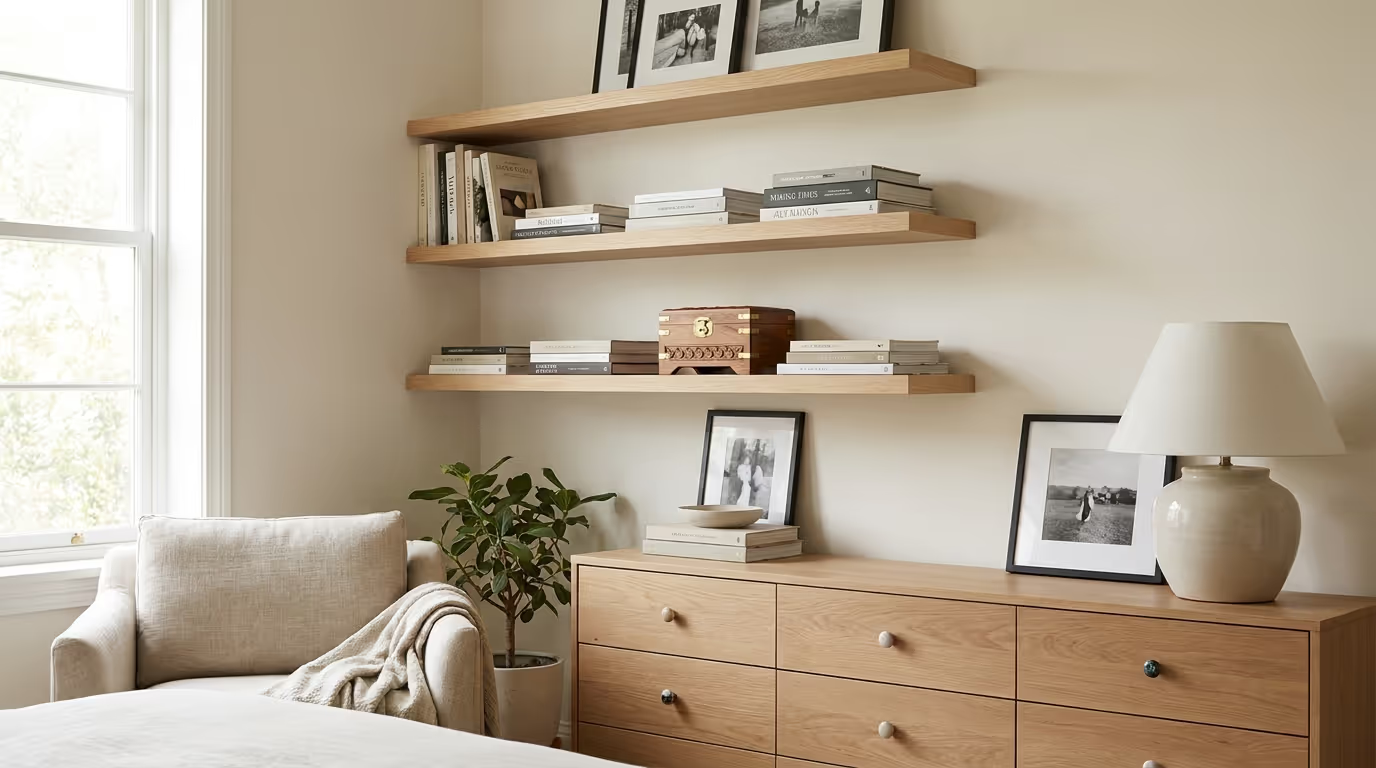
To turn the corner into a proper reading nook, stack two or three shelves above and beside the seat for books, a small plant, and framed photos. Matching the timber tone of the shelves to the cushions or frame ties the whole nook together, while a contrasting finish can make it feel like a deliberate feature.
Lighting finishes the nook. A small clip-on reading lamp or a plug-in wall light above the shelves keeps the corner usable after dark, and warm-white bulbs suit the cosy mood the seat is designed for.
Like what you see? You buy this floating shelve on our store right now Black Floating Shelves
Conclusion
An egg chair brings comfort and character to a home in a compact package. Choose between indoor and hanging models, pick materials that suit your climate and cushions that suit your body, and place the chair somewhere you’ll actually use it. Whether you choose an indoor pod or a hanging model for the veranda, taking a little time over size, support, and cushions makes the difference between a chair that’s loved daily and one that’s quietly abandoned. Add floating shelves beside it, and you’ve got a nook that’s practical, personal, and properly finished.
How much space does an egg chair need?
A typical indoor model needs a footprint similar to a standard armchair, plus around 60cm of clear space in front, and extra swing room if it hangs.
Can I use an indoor egg chair outside?
Not usually. Indoor models are rarely UV or water resistant, so choose a weatherproof outdoor version for patios and verandas.
Do hanging egg chairs need special installation?
Ceiling-mounted models must be anchored into a structural beam or joist and match the chair’s weight rating. A freestanding frame avoids drilling entirely.
Can floating shelves go next to an egg chair?
Yes. A floating shelf beside the seat adds room for books, a lamp, or a drink without taking up floor space.