A wine cabinet is more than somewhere to stash bottles. Done well, it protects your collection, keeps glassware close at hand, and gives a dining room or kitchen a piece of furniture that looks as good as it works. Whether you own a handful of favourites or a growing cellar, the right cabinet makes entertaining easier and keeps your bottles in better shape.
Choosing one isn’t just about size, though. Some units are simple storage furniture, others are temperature-controlled, and the difference matters if you plan to keep wine for more than a few weeks. Materials, capacity, and placement all play a part too, and getting them wrong can mean damaged bottles or a unit that never quite fits the room.
This guide covers everything you need to know about choosing a wine cabinet, from freestanding and cooled styles to materials, placement, and how it compares to a wine fridge, plus how floating shelves can finish the space.
Why a Wine Cabinet Is a Smart Addition to Your Home
A wine cabinet solves a problem most wine drinkers know well: bottles end up lying on kitchen benches, wedged in pantries, or stacked in the cardboard box they came in. A dedicated cabinet gives every bottle a proper home, keeps labels visible, and stores them on their sides so the corks stay moist and the seal stays tight.
It also protects what you’ve paid for. Wine dislikes light, heat, and vibration, and a well-placed cabinet keeps bottles away from all three. Even a basic unit in a cool, shaded spot beats a sunny kitchen bench, where daily temperature swings can age a bottle far faster than it should.
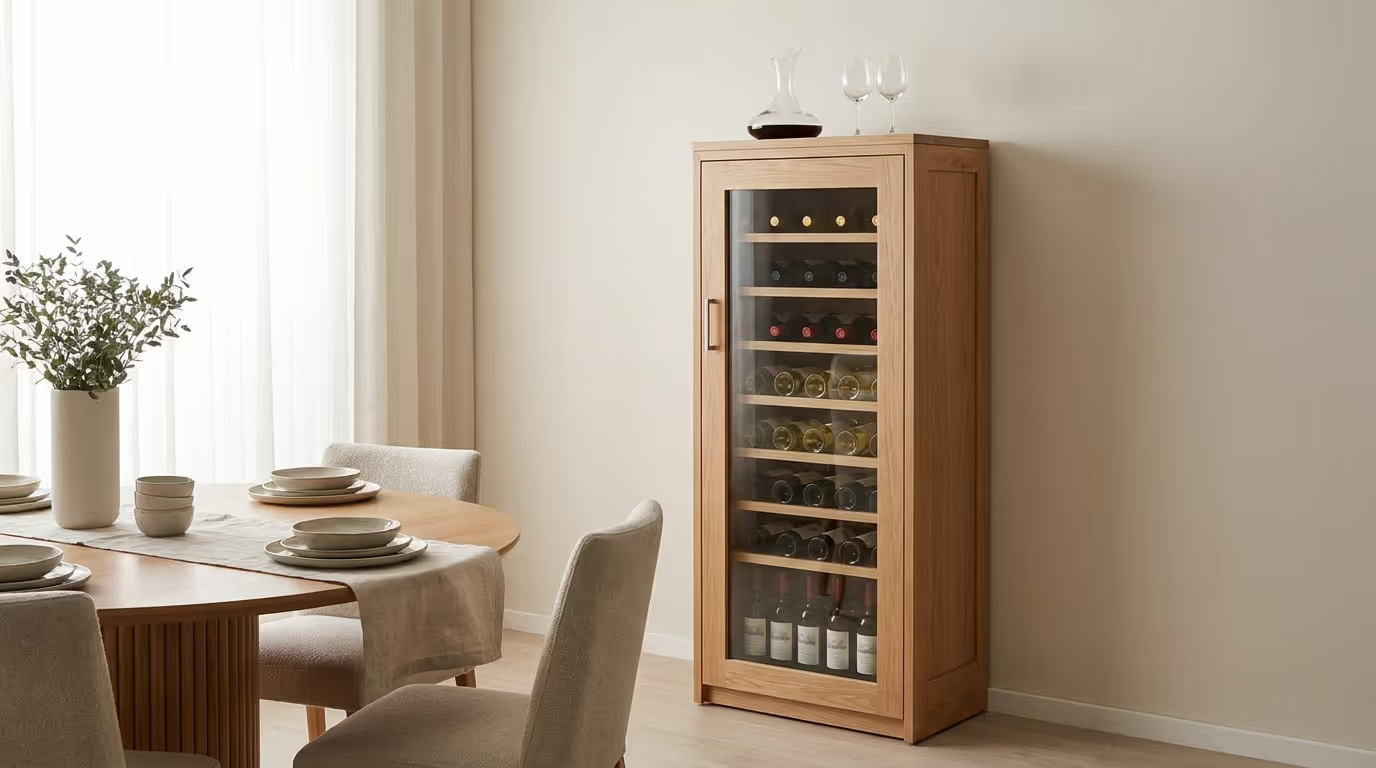
Beyond storage, a wine cabinet works as a styling piece. A timber unit with a glass door or an open rack adds warmth to a dining room, and the top surface doubles as a serving spot for decanters and glasses when guests arrive. It also keeps the kitchen tidier by moving bottles and glassware out of the way.
Before getting into the details, it helps to see what’s available. Browse our furniture and shelving collection here.
Understanding Wine Cabinet Styles and Features
Not every design is built the same way, and the differences in cooling, capacity, and construction affect both how it looks and how well it protects your bottles.
Freestanding Wine Cabinet Styles and Sizes
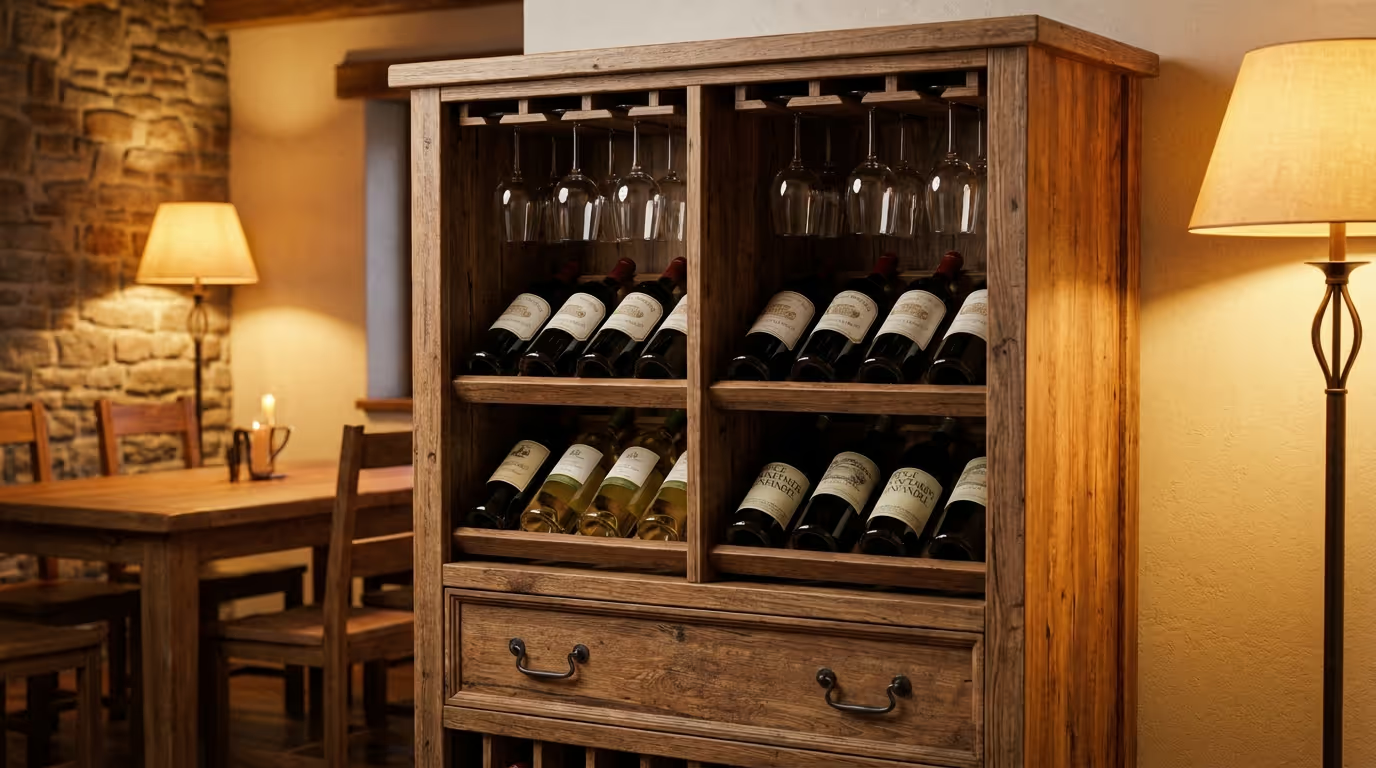
A freestanding wine cabinet is the most common choice, ranging from compact units holding around twelve bottles to full-height cabinets holding fifty or more. Slimline models suit narrow gaps beside a dining table, while wider sideboard-style units add closed storage underneath for linen and serving ware.
Look at the internal layout as well as the outside dimensions. Angled racks show labels better, while horizontal racks fit more bottles. Many units combine bottle racks with a stemware rail and a drawer, so check what’s included before you buy. It also pays to think about how your collection might grow, since most people outgrow their first cabinet within a couple of years.
Temperature-Controlled Wine Cabinet Options
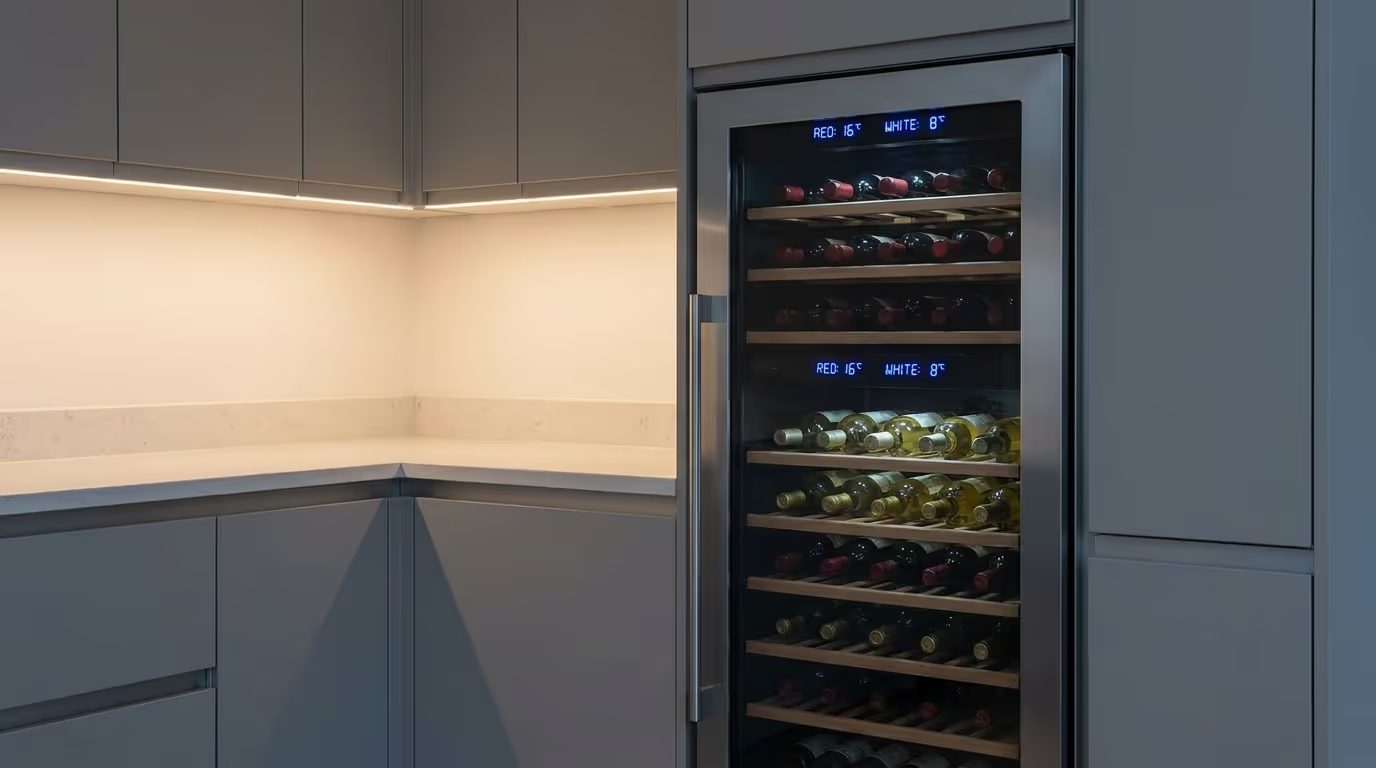
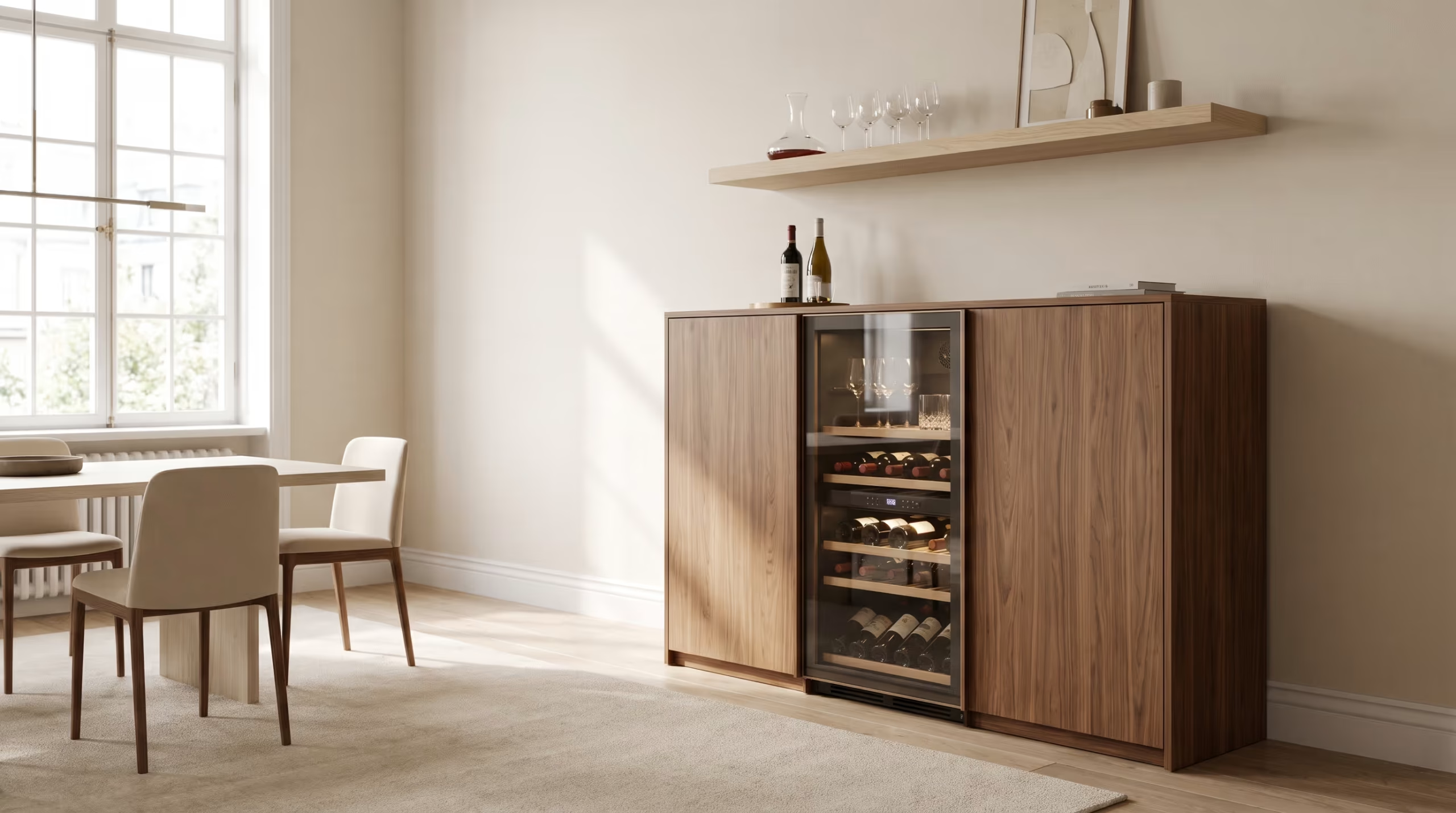
A temperature-controlled wine cabinet works like a small fridge built for wine, holding a steady temperature around 12 to 14°C. It’s the better choice if you’re keeping bottles for months or years, or if your home gets warm in summer. Dual-zone models let you store reds and whites at different temperatures in the same unit.
These units cost more and need a power point, plus a little ventilation space around the sides and back. For everyday drinking bottles, a non-cooled cabinet in a cool room is usually enough.
Wine Cabinet Materials and Finishes
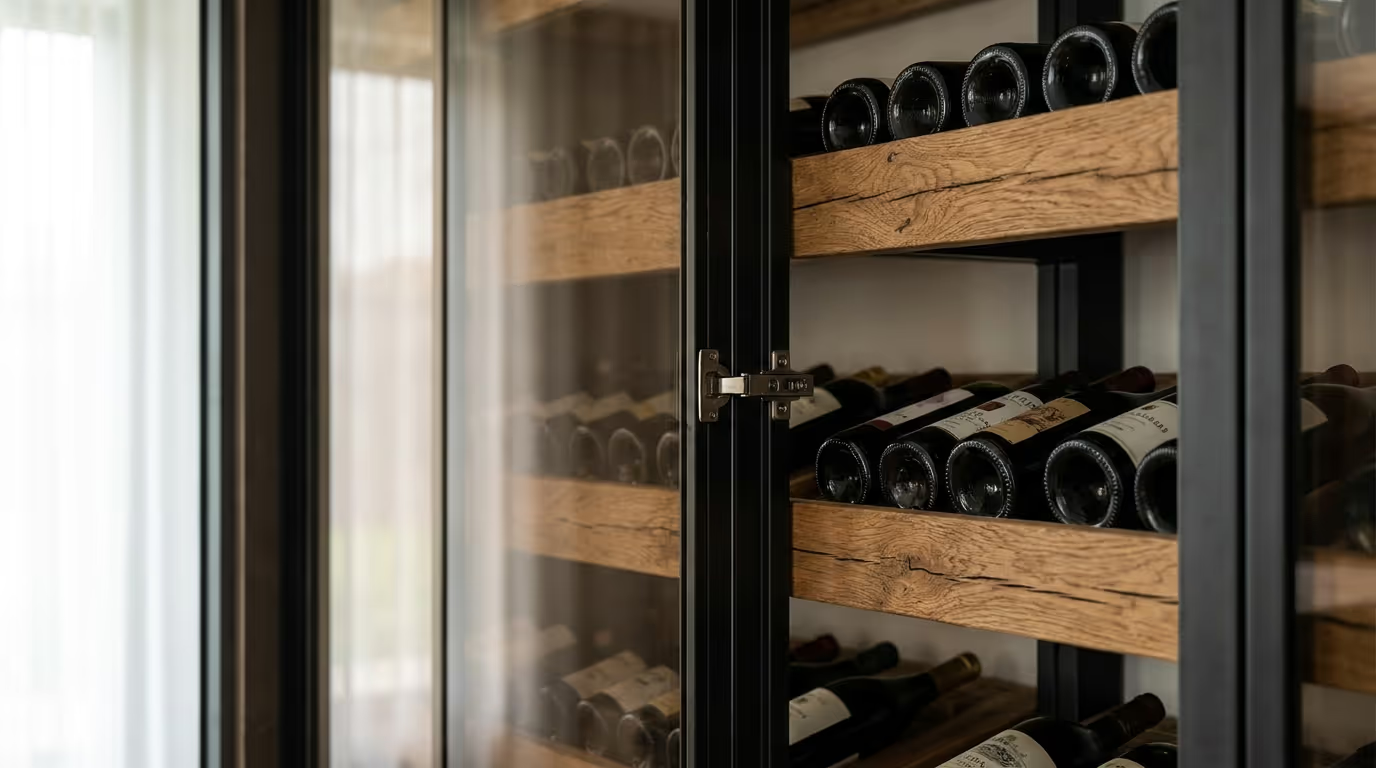
Timber is the classic material for a wine cabinet, offering strength and a natural grain that suits most interiors. Engineered wood with a veneer or laminate finish costs less and handles daily use well. Finishes range from light oak and white to dark walnut and matte black, and metal frames with glass doors suit more contemporary rooms.
Check the glass if a door is included. UV-filtering or tinted glass protects wine from light, and soft-close hinges make the door quieter in a busy dining room. Solid shelving also holds heavy bottles without sagging, which matters more than it sounds once the unit is full.
Ready to explore our vast veriety of products? Explore our furniture range here.
Choosing the Right Wine Cabinet for Your Space
Once you understand the styles available, fitting the right piece into your home comes down to capacity, placement, and how it works alongside your existing furniture. As a rough guide, buy a unit that holds about double what you own today, since collections tend to grow faster than people expect.
Wine Cabinet Placement Tips for Dining Rooms and Kitchens
Position your wine cabinet away from direct sunlight, ovens, and heating vents, since heat is the biggest threat to stored bottles. A dining room wall or hallway is ideal because it stays cooler than the kitchen. Leave a few centimetres behind a cooled unit for ventilation, and about 90cm in front so the door can open fully.
Make sure the floor is level too. A wobbly cabinet can transmit vibration to the bottles, and a full unit is heavy, so check the floor and wall can support it. Securing a tall unit to the wall with a bracket is a sensible safety step, especially in homes with children.
Wine Cabinet vs Wine Fridge: Which Do You Need?
A wine fridge cools and controls humidity but offers little in the way of looks or extra storage. A cabinet gives you furniture-quality styling, space for glasses and accessories, and often a drawer or cupboard. If you drink most bottles within a few months, a cabinet in a cool room is enough. If you cellar wine long term, a cooled model or a fridge is the safer choice, and some homes use both.
Not sure which wine cabinet suits your home? Get in touch with our team for advice.
Complete Your Wine Cabinet Corner with Floating Shelves
A good cabinet handles the bottles, but floating shelves handle everything else: glasses, decanters, and the styling that makes a wine corner feel finished.
Floating Shelves Above a Wine Cabinet
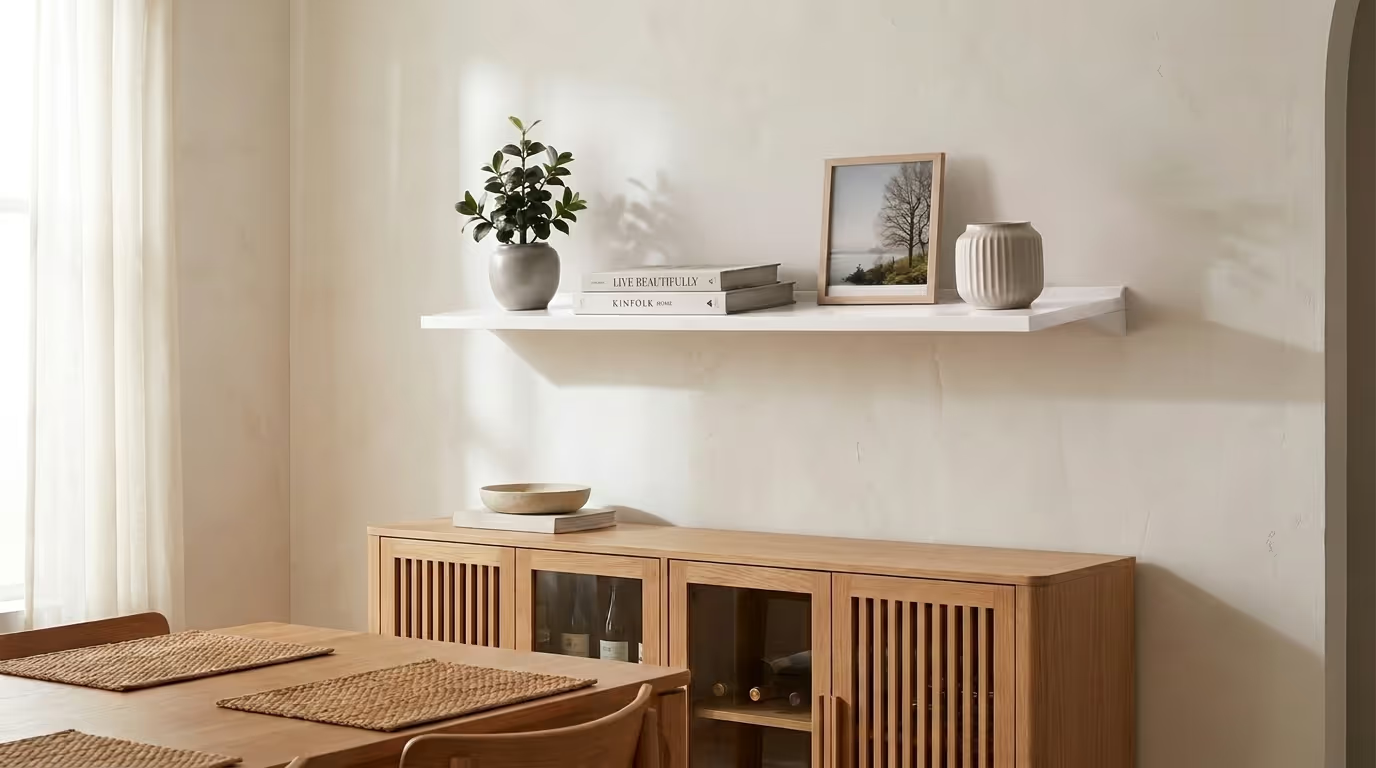
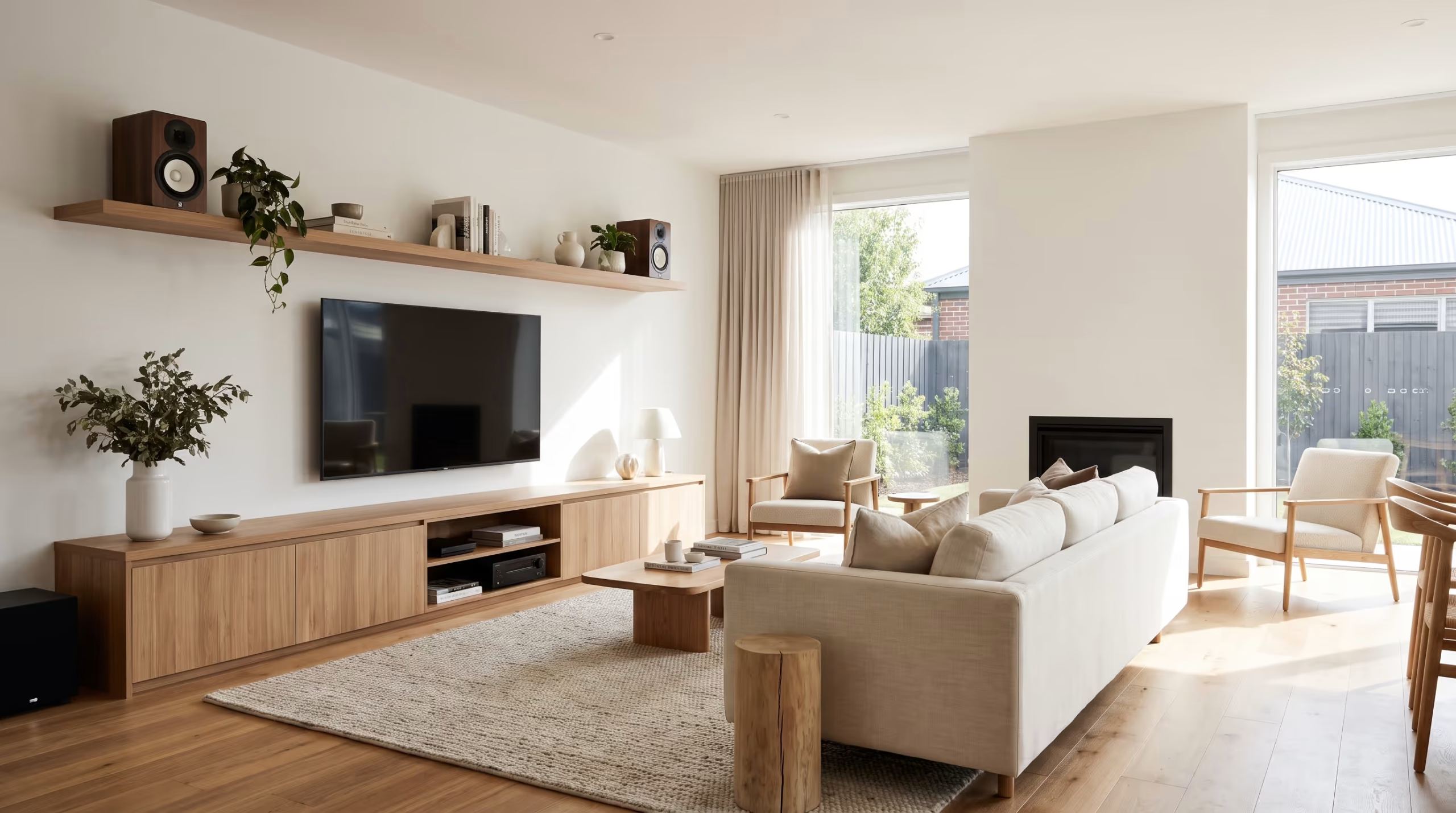
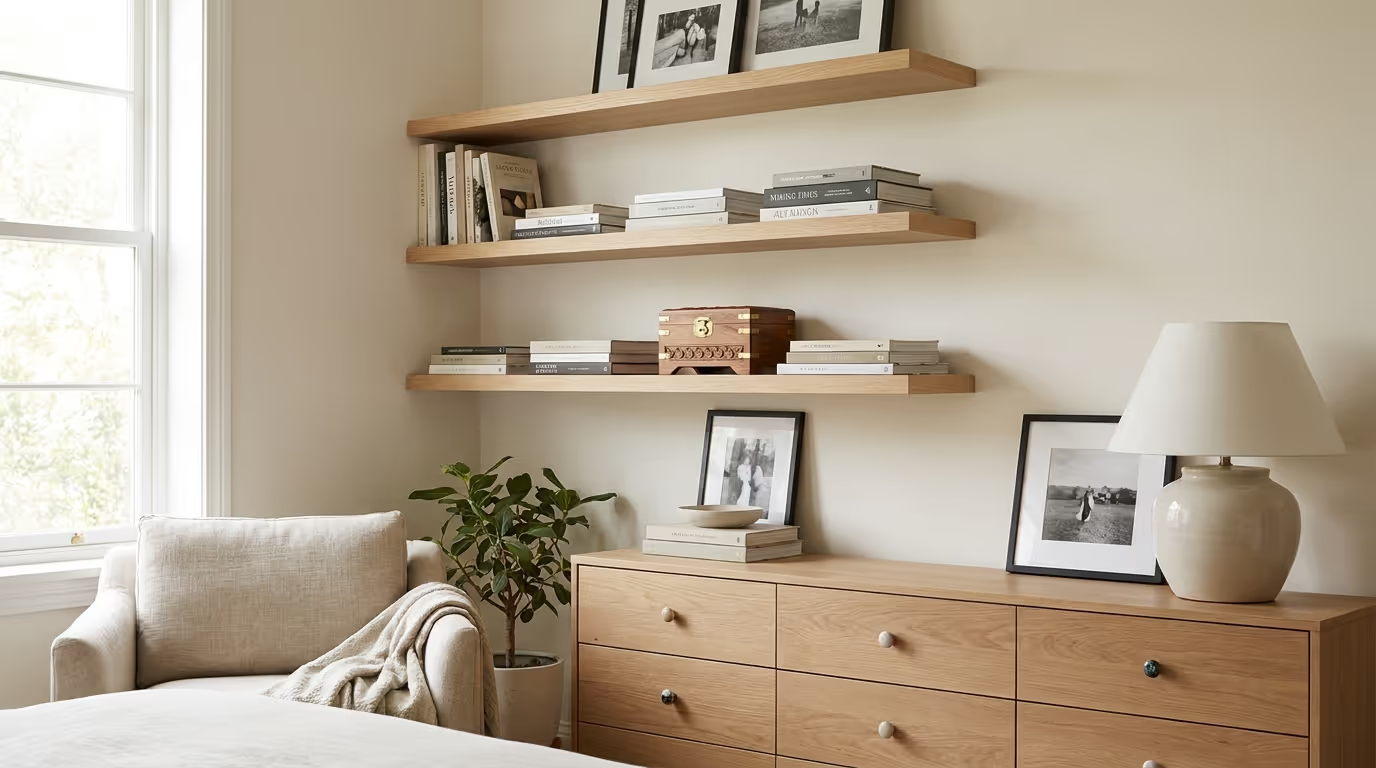
The wall above your wine cabinet is usually empty, and a floating shelf turns it into useful display space. Hang a shelf above the unit for stemware, a decanter, or a small plant, keeping the top of the cabinet clear for pouring. Matching the shelf timber to the cabinet keeps the whole wall cohesive, and shelves are easy to size to the width of the unit.
Make your house complete with this Floating Shelve Floating White Shelves
Floating Shelves Beside a Wine Cabinet for Glassware Display
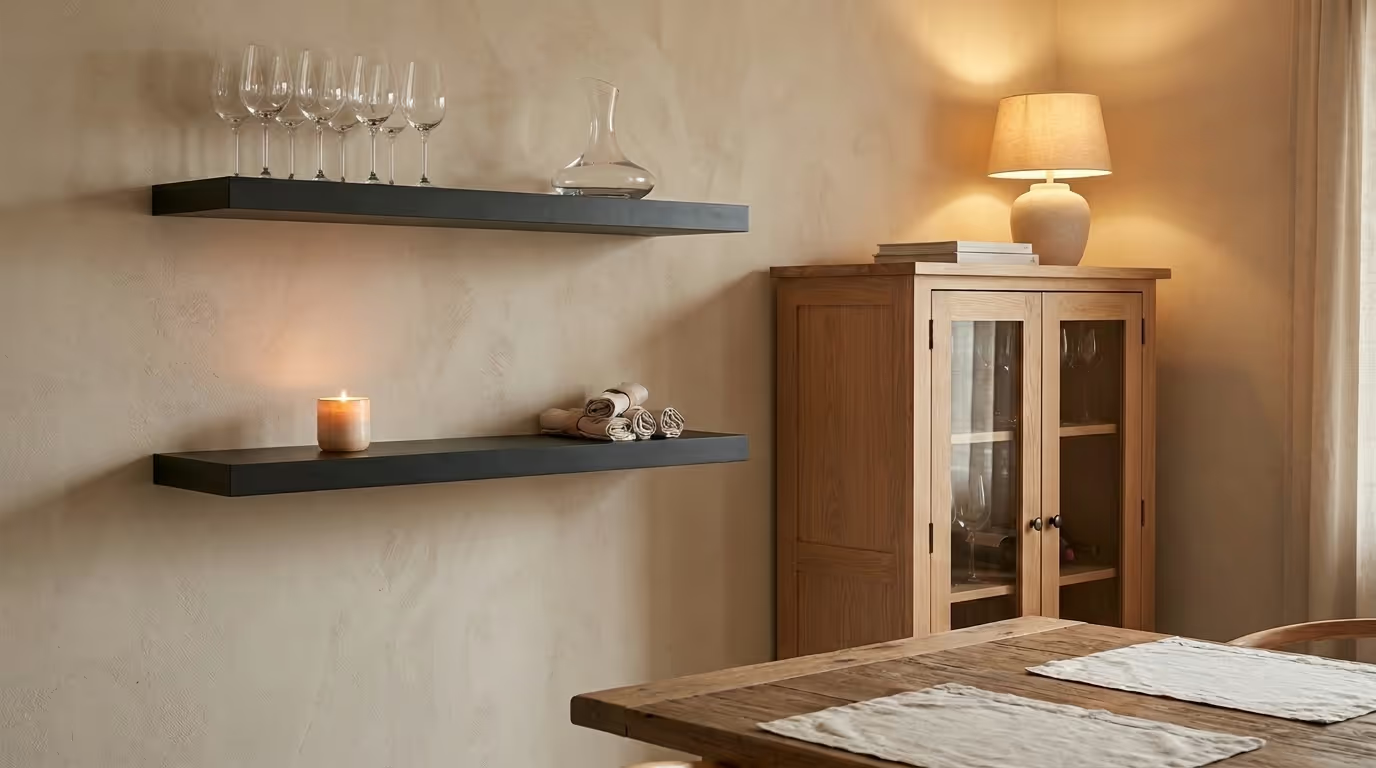
A pair of shelves mounted beside the wine cabinet gives glassware its own display, so the cabinet doesn’t have to hold everything. Glasses stored within easy reach make serving simpler, and a few well-chosen pieces look attractive on show. Leave enough gap between shelves for tall glasses and decanters, and keep the heaviest items on the lowest shelf.
Like what you see? You buy this floating shelve on our store right now Black Floating Shelves
Conclusion
A wine cabinet protects your bottles, keeps entertaining easy, and adds a stylish piece of furniture to the room. Choosing between freestanding and temperature-controlled units, picking materials that suit your home, and placing the cabinet away from heat all make a real difference. Add floating shelves above or beside it, and you have a wine corner that’s practical, protected, and beautifully finished.
How many bottles should a wine cabinet hold?
Choose a unit that holds roughly double your current collection, since most people outgrow their first cabinet within a couple of years.
Do I need a temperature-controlled cabinet for wine?
Only if you store bottles long term or live in a warm home. For everyday drinking, a standard cabinet in a cool, shaded room is enough.
Where should I put a wine cabinet?
Keep it away from direct sunlight, ovens, and heating vents, ideally on a dining room wall or in a hallway, with about 90cm clear in front for the door.
Can floating shelves go above a wine cabinet
Yes. A floating shelf above the unit adds display space for stemware and décor while keeping the top of the cabinet free for serving.